The Walking Pad Posture Mistake That Causes Back Pain Within a Week
Quick Answer: New walking pad back pain almost always comes from a monitor or desk height that’s slightly wrong for standing, forcing a forward head lean that compounds with every step over hours of use. Matching your standing desk height and monitor position to true standing ergonomics — not your seated setup — fixes most of it.
You set up a walking pad expecting more energy and better focus, and within a week your neck and lower back ache more than they ever did sitting. The walking usually isn’t the problem — the desk height most people forget to adjust is.
Why does walking pad posture pain show up faster than regular standing desk pain?
Walking adds a repetitive forward-lean load on top of any existing desk height misalignment, essentially multiplying a small ergonomic error by thousands of steps instead of leaving you simply standing still and slightly hunched. A monitor angle that’s tolerable standing still becomes a real problem repeated with every stride over an hour-long walking session.
This is why walking pad users often report pain appearing within days, faster than typical standing desk soreness develops.
What’s the correct monitor and desk height for walking pad use specifically?
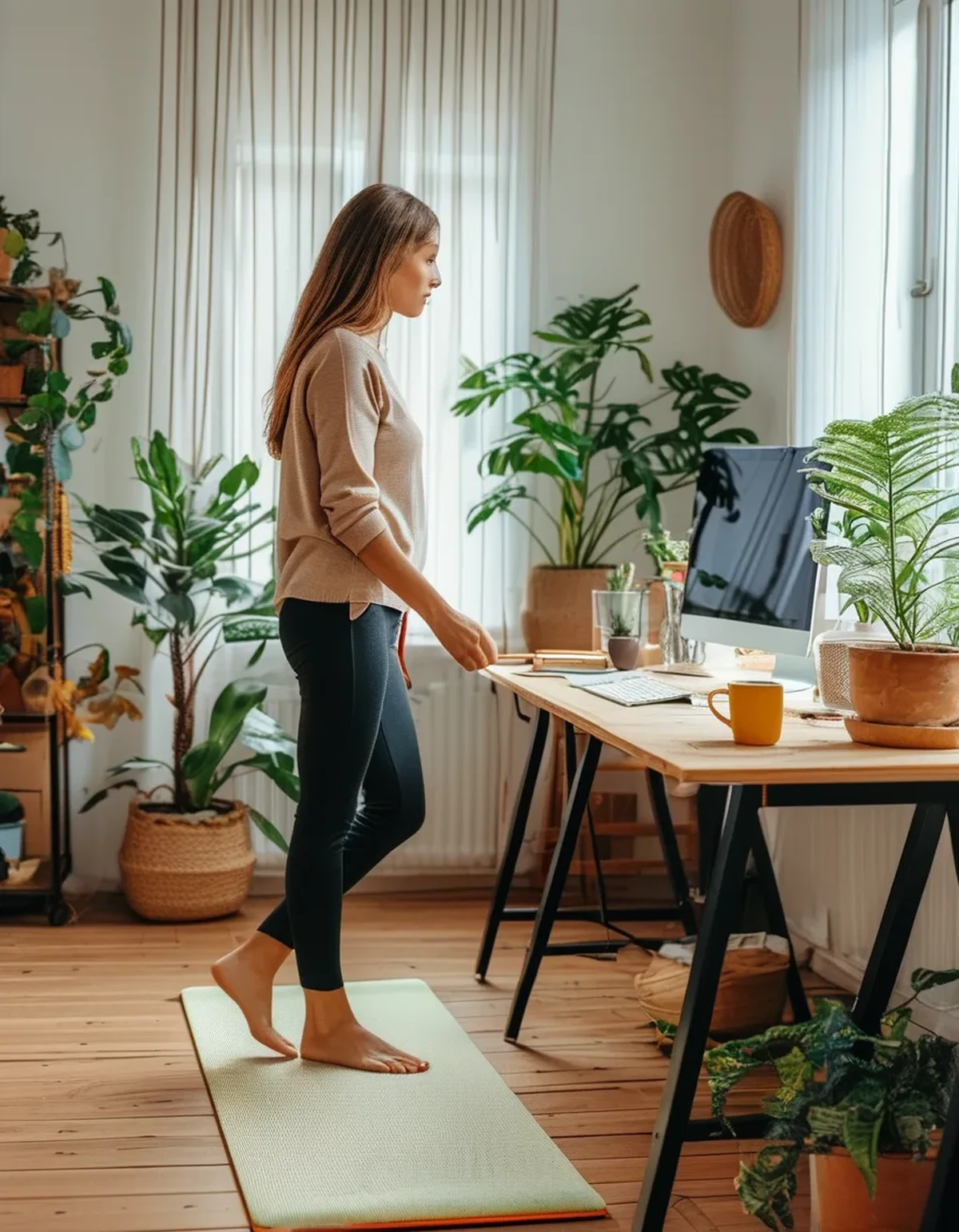
Your monitor’s top edge should sit at or just below eye level, and your elbows should rest at roughly 90 degrees at your keyboard height — measured while standing on the pad itself, not while standing still off it, since walking naturally raises your posture slightly compared to standing static. Many people set their desk height once while standing still and never re-check it once the pad is actually moving under them.
A height that felt right standing still can be an inch or two off once you’re mid-stride, which is enough to cause a forward head lean over a long session.

Does walking speed affect how much posture matters?
Yes — slower speeds (under 2 mph) are more forgiving of minor posture errors since your body sways less, but even slight desk misalignment compounds fast at speeds most people use for focused work. Many walking pad users default to a speed that’s comfortable for walking but never re-check whether that same speed is comfortable for typing and reading at their current desk height.
If you increase your walking speed, it’s worth re-checking your posture at that new speed rather than assuming your original setup still holds.
Myth vs Fact: Walking Pad Desk Ergonomics
Myth: Any standing desk height works fine once you add a walking pad. Fact: Walking pad use needs its own height check, done while actually walking, not just while standing still.
Myth: Back pain from a walking pad means you should stop using it. Fact: In most cases it means the desk height needs adjusting, not that walking pad work itself is the problem.
FAQ: Walking Pad Posture and Back Pain, Answered
How long should I use a walking pad before checking my posture again?
Re-check after any speed change and at least once every couple of weeks, since posture habits can drift even at a fixed setup.
Should I lower my walking speed if I already have back pain?
Yes, temporarily — a slower pace reduces the compounding effect while you correct desk height and posture, then increase speed once pain-free.
Is a walking pad worse for posture than a regular treadmill desk?
Not inherently — the posture principles are the same, but walking pads are often used with smaller, less adjustable desks, which is the real source of most posture problems.
TL;DR:
- Walking multiplies small desk height errors into fast, compounding pain
- Check monitor and keyboard height while actually walking, not standing still
- Re-check posture whenever you change walking speed
- Back pain usually signals a height mismatch, not a reason to quit walking pad work
If pain showed up within a week of starting, look at your desk height before you look at the walking itself — it’s almost always the fixable culprit.
See It in Motion
Seen here: Super High Waist Embossed Yoga Leggings with Inner Pocket — shop it on bubblelime.com
Keep Reading
This article is for general informational and styling purposes only. Fit, sizing, and product availability may vary.