Why Walking Pad Desk Setups Fail From Desk Height Mismatch More Than From the Pad Itself
A new walking pad setup that causes shoulder or neck discomfort within the first week often gets blamed on the pad itself, when the actual problem is usually a desk height that was calibrated for sitting and never adjusted for the different posture walking requires.

Why a Desk Height Calibrated for Sitting Doesn’t Work for Walking Posture
The height-mismatch mechanism: the sitting-desk-height-is-calibrated-for-a-seated-elbow-position-which-differs-from-a-standing-walking-elbow-position (the the reference point used to set desk height changing entirely between sitting and standing or walking — the sitting-height-calibrated-for-different-elbow-position), the the-walking-adds-a-slight-vertical-bounce-that-a-static-standing-desk-height-doesnt-account-for (the the natural up-and-down motion of walking interacting with a fixed desk height in a way pure standing doesn’t — the walking-bounce-not-accounted-for-in-static-height), the the-a-mismatched-height-forces-shoulders-to-hunch-or-reach-repeatedly-over-an-entire-workday (the a small per-instant postural error compounding into real discomfort over hours of repetition — the mismatched-height-forces-repeated-hunch-or-reach), and the reframe (walking pad discomfort frequently being a desk calibration problem rather than a problem with the pad or the concept of walking while working itself)).

The Specific Height Adjustment That Fixes Typing and Screen Position While Walking
The actual adjustment: the raise-the-desk-slightly-higher-than-the-standard-standing-desk-height-recommendation-to-account-for-the-walking-motion (the a small additional increase beyond typical standing-desk guidance specifically because of the added movement — the raise-desk-slightly-above-standard-standing-height), the the-elbows-should-rest-at-roughly-ninety-degrees-while-actively-walking-not-just-while-standing-still (the checking the actual angle during motion rather than only in a static standing test — the check-ninety-degree-elbow-angle-while-actively-walking), the the-screen-height-should-be-rechecked-separately-since-desk-height-changes-can-shift-the-effective-viewing-angle (the a desk height adjustment potentially throwing off a previously correct screen height, requiring a second check — the recheck-screen-height-after-desk-adjustment), and the frame (raising the desk slightly above standard standing height, checking elbow angle during actual walking rather than standing still, and rechecking screen height separately — the specific calibration that accounts for the difference walking motion makes).
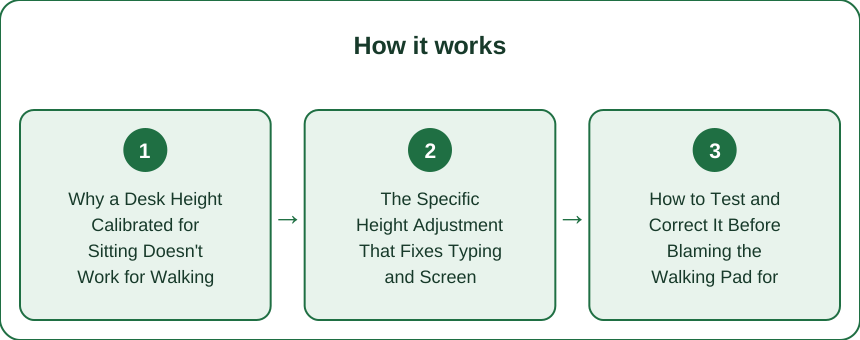
How to Test and Correct It Before Blaming the Walking Pad for Discomfort
The testing approach: the walk-at-a-normal-working-pace-for-several-minutes-while-checking-shoulder-and-neck-tension-specifically (the a real, sustained test rather than a brief static check that won’t reveal the cumulative issue — the test-with-several-minutes-of-actual-walking-pace), the the-adjust-desk-height-in-small-increments-and-retest-rather-than-guessing-at-one-large-change (the a gradual, iterative correction process rather than a single uncertain adjustment — the adjust-in-small-increments-and-retest), the the-only-conclude-the-pad-itself-is-the-problem-after-desk-height-has-been-properly-calibrated-and-tested (the ruling out the more common and more fixable cause before assuming the equipment itself is at fault — the rule-out-desk-height-before-blaming-pad), and the frame (testing with several minutes of actual walking pace while monitoring tension, adjusting height in small increments and retesting, and only blaming the pad itself after desk height has been properly ruled out — a process that catches the far more common actual cause of the discomfort).
A new walking pad setup that causes shoulder or neck discomfort within the first week often gets blamed on the pad itself, when the real problem is usually desk height calibrated for sitting and never adjusted for the different posture walking actually requires, since walking adds a slight vertical bounce a static desk height doesn’t account for and forces repeated hunching or reaching that compounds into real discomfort over a workday. The fix is raising the desk slightly higher than standard standing-desk guidance to account for that walking motion, checking elbow angle at roughly ninety degrees during actual walking rather than standing still, and separately rechecking screen height since the desk adjustment itself can shift the effective viewing angle. Test and correct it by walking at a normal working pace for several minutes while specifically monitoring shoulder and neck tension, adjusting desk height in small increments and retesting rather than guessing at one large change, and only concluding the pad itself is the problem after desk height has been properly ruled out.
See It in Motion
Seen here: High Waist Yoga Leggings with Side Pockets — shop it on bubblelime.com
Keep Reading
This article is for general informational and styling purposes only. Fit, sizing, and product availability may vary.